

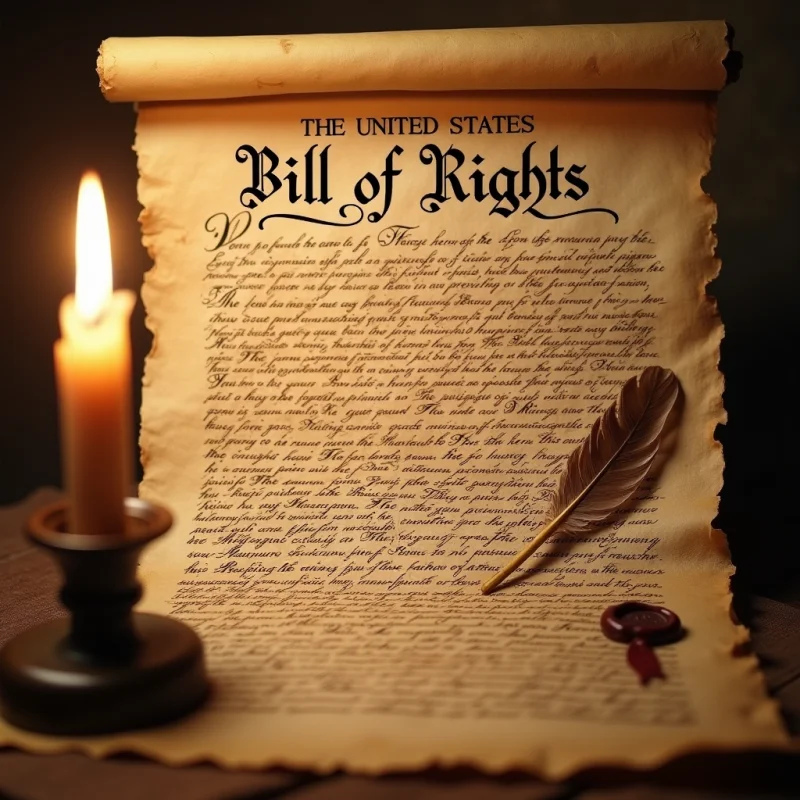
The United States Bill of Rights
The first ten amendments to the United States Constitution, guaranteeing fundamental rights and freedoms.
Description
About The Bill of Rights
The Bill of Rights comprises the first ten amendments to the United States Constitution, ratified on December 15, 1791. These amendments guarantee essential civil liberties and remain the bedrock of American jurisprudence, protecting individual freedoms from government overreach.
Historical Context
During the Constitutional Convention of 1787, Anti-Federalists expressed concern that the new Constitution lacked explicit protections for individual liberties. James Madison, initially skeptical of the need for a bill of rights, eventually championed these amendments to secure ratification and address legitimate concerns about federal power.
The Ten Amendments
- First Amendment: Freedom of religion, speech, press, assembly, and petition
- Second Amendment: Right to keep and bear arms
- Third Amendment: Protection against quartering of soldiers
- Fourth Amendment: Protection against unreasonable searches and seizures
- Fifth Amendment: Rights in criminal cases, due process, double jeopardy protections
- Sixth Amendment: Right to a fair, speedy trial
- Seventh Amendment: Rights in civil cases
- Eighth Amendment: Protection against cruel and unusual punishment
- Ninth Amendment: Rights retained by the people
- Tenth Amendment: Powers reserved to the states and people
Enduring Significance
The Bill of Rights continues to shape legal debates and court decisions over two centuries later. From free speech controversies to privacy rights in the digital age, these amendments remain living documents, constantly reinterpreted to address new challenges.
This free ebook edition presents these foundational amendments, essential reading for understanding American constitutional law and civil liberties.


Reviews
There are no reviews yet.