Beowulf: An Anglo-Saxon Epic Poem
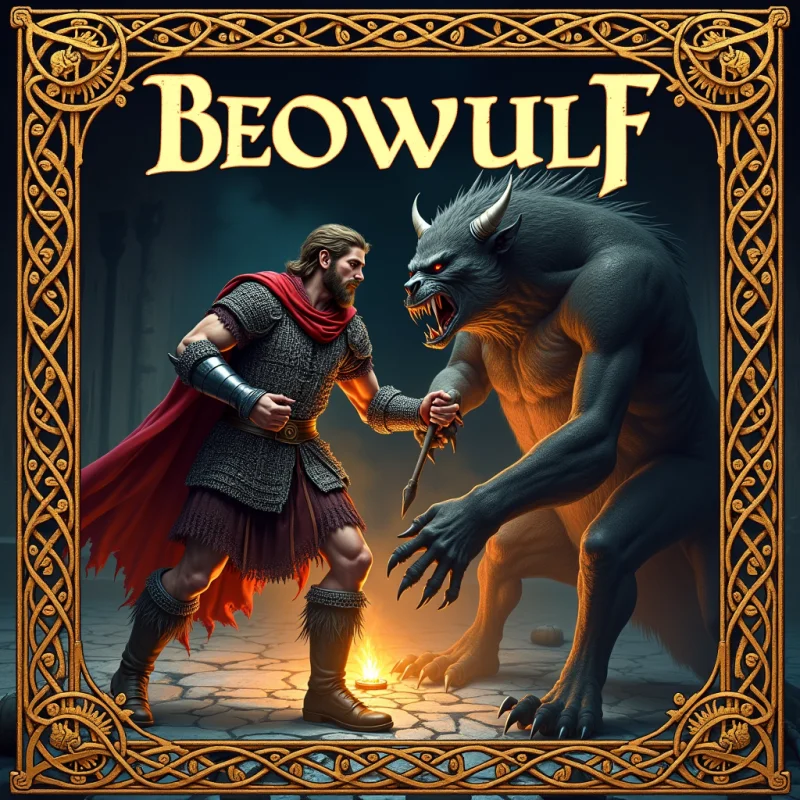
The legendary tale of the Geatish hero Beowulf who battles the monster Grendel, Grendels mother, and a dragon.
Description
About This eBook
Overview
Beowulf is the oldest surviving long poem in Old English and one of the foundational works of English literature. This epic tells the story of Beowulf, a Geatish hero who travels to Denmark to aid King Hrothgar, whose mead hall Heorot is terrorized by the monstrous Grendel.
Plot Summary
The poem follows Beowulf through three great battles. First, he defeats Grendel by tearing off the monster’s arm in hand-to-hand combat. Then he descends into a underwater lair to slay Grendel’s vengeful mother. Finally, fifty years later as an aged king, Beowulf faces a dragon threatening his own kingdom—a battle that will cost him his life but secure his eternal glory.
Themes & Significance
- Heroism & Honor: The Germanic warrior code and the pursuit of glory through brave deeds.
- Good vs. Evil: Beowulf as the champion of light against dark, monstrous forces.
- Mortality & Legacy: The inevitability of death and the importance of leaving a lasting reputation.
- Loyalty & Kingship: The bonds between lord and thane, and the duties of a good king.
Historical Context
Composed sometime between the 8th and 11th centuries, Beowulf blends pagan Germanic legend with Christian elements. The only surviving manuscript dates to around 1000 AD and was nearly destroyed in a fire in 1731. This translation by J. Lesslie Hall (1892) preserves the alliterative verse style of the original Old English.

Reviews
There are no reviews yet.